The doorstep count: unpacking a haul against your own docket
This count happens once, and only you can do it. A parcel opened in a hurry and counted later is much harder to claim against.
Before you sign for the parcel
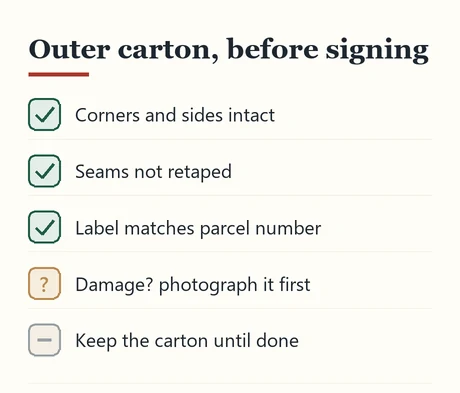
The doorstep count starts before the parcel is in your hands. Look at the outer carton while the courier is still there: crushed corners, a torn side, retaped seams or a carton that rattles when it should not. LoongBuy's FAQ gives the same advice in plainer words: check whether the outer package is intact before signing, inspect the parcel on the spot if necessary, and keep the carton, tape, photos and videos in case after-sales support or a claim is needed.
If the carton is visibly damaged, photograph it from several sides before opening, with the shipping label readable in at least one photo. Some carriers let you note damage on the delivery record; where that is possible, do it. Do not throw the carton away until the count is finished and any problem has been answered.
Compare the label with your packing list as well. The parcel number on the label should match the one on your list; with a split haul, it tells you which of your parcels this is.
Unpack in an order you can repeat
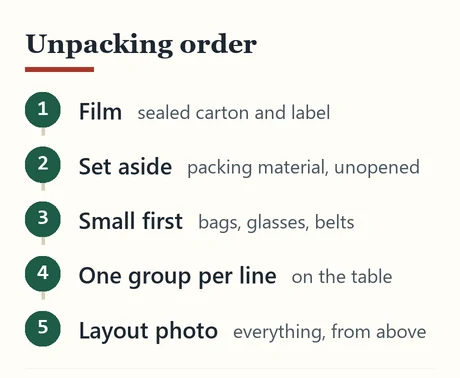
Open the parcel in one continuous take on video, starting with the sealed carton and the label in view. One take matters: a video with cuts invites the question of what happened between them. Then work through the contents in the same order every time:
- Lift out loose items and packing material and set them aside, unopened.
- Find the smallest pieces first: jewellery bags, glasses, belts, beanies, and anything tucked inside shoes or pockets.
- Lay out the larger items one group per docket line.
- Open each inner bag only when its line is on the table, so pieces cannot migrate between lines.
A layout photo of all lines at the end, taken from above, is the doorstep equivalent of the warehouse group photo. With it, your count no longer depends on memory.
Matching what came out against what went in
The packing list you wrote at submission is the reference here, not the original order. That difference matters: a line held back for a second parcel, a shoe box removed on request or a gift added at the warehouse should already be on the packing list, so none of them should look like a surprise now.
Tick each line for quantity first, then for the details you could not check from photos: fit, smell, stitching on the inside, the far side of a folded garment. Where the warehouse sent photos of the packed parcel, compare the layout with what you found; Kakobuy, for example, offered three free photos of the packed parcel when the option was ticked at shipping. If the parcel photos show an item that is not in the box, that is a strong point to raise.
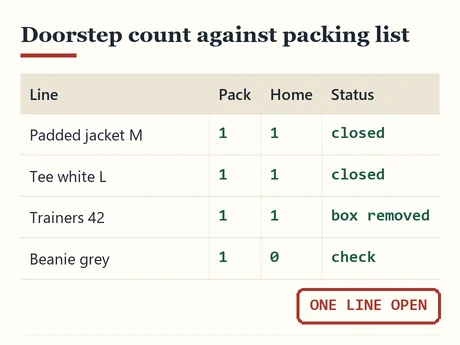
Record the unpacked number for every line in the docket. A line with landed, packed and unpacked all equal is closed; anything else needs a note.
When a line is missing from the box
Before reporting a missing line, look in the places items hide: inside shoes, inside hooded tops and jacket pockets, inside bags, and among the packing material you set aside. Small accessories are the usual culprits, which is why they are counted first.
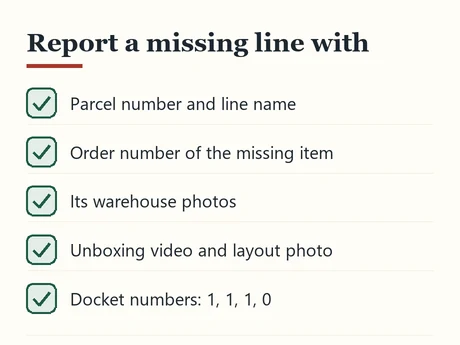
If it is truly missing, write to the agent the same day. Send the parcel number and line name, the order number for the missing line, its warehouse photos, the parcel photos if you have them, the unboxing video and the layout photo. Ask a narrow question: was this item packed into this parcel? The agent can check the packing record; you cannot.
Keep the tone factual. A short message that lines up the docket numbers, for example "ordered 1, stored 1, packed 1, unpacked 0", gives the agent everything needed to look into it, and it is far quicker to answer than a long complaint.
Damage, wrong size and wrong colour after delivery
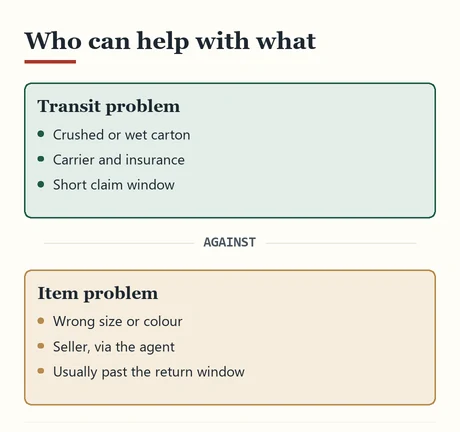
Problems found at home sort into two groups, and the group decides who can help. Transit damage, such as a crushed box or a wet carton, is a carrier and insurance matter, and claim windows are short; RizzitGO's route texts, for instance, allow 15 days from delivery or 30 days from the last tracking update. Problems with the item itself, such as wrong size, wrong colour or a fault inside the garment, are seller matters, and by now they are hard to fix, because return windows at most agents close shortly after an item is stored in the warehouse.
That is the strongest reason to put effort into the warehouse count. A size label in a photo checked on day one is worth more than any complaint after delivery. For future hauls, note on the docket which kinds of problem you only found at home, and ask for the photo or measurement that would have caught them next time.
If an item cannot be sent back, which is common across borders, record the outcome anyway: kept, resold locally, given away. It is part of what the haul really cost.
Closing the docket
A haul is finished when every line has four matching numbers or a written reason why not. Before you file the docket away, add three notes that make the next haul easier:
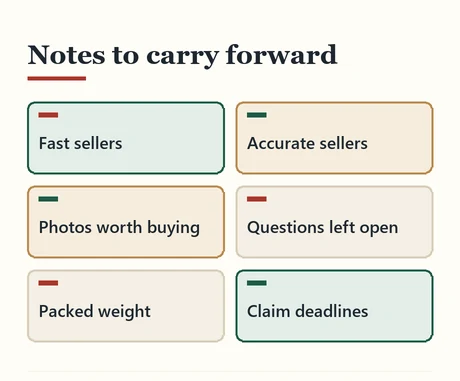
- Sellers. Which sellers sent quickly and accurately, and which caused a short or wrong line.
- Photos. Which extra photos or measurements were worth paying for, and which questions the free set never answered.
- Parcel. The packed weight against the number of lines, so next time you can judge whether a trial pack is worth buying.
Keep the unboxing video and the layout photo for a few weeks after delivery, at least until any claim window has closed. Then the docket becomes a reference rather than a working document, and your next shortlist starts from the sellers you already trust.